Dental anxiety is the fear, worry or stress some people feel about going to the dentist. It is common: a U.S. study in private dental offices found that about 19% of patients had moderate to high dental anxiety. For some people it is mild nervousness; for others it is strong enough to make them avoid care for years, which can let small problems turn into bigger ones.
If this sounds like you, you are not unusual, and there are practical ways to make visits easier.
The short version
- Dental anxiety is common and more often reported by women.
- Common triggers include past bad experiences, fear of pain or needles, the sound of the drill, the gag reflex, cost and fear of bad news.
- Telling the dental team about your anxiety is one of the most helpful first steps.
- Small changes such as agreed stop signals, breaks and clear explanations can make a real difference.
Why dental anxiety happens
In the U.S. study mentioned above, patients described five main sources of anxiety: fear of the dental experience itself, a previous negative experience, the cost of treatment, the gag reflex, and fear of hearing bad news. A Dutch survey found that fear of dental treatment was rated as more severe than many other common fears, and was often linked to memories of earlier distressing experiences.
Strategies that may help
Before the visit
- Tell the office when you book that you feel anxious. A good team will plan around it.
- Choose a time of day when you are less rushed and stressed.
- Bring headphones and your own music or podcast.
- Avoid too much caffeine beforehand.
During the visit
- Agree on a stop signal, such as raising your hand.
- Ask the dentist to explain each step before doing it.
- Try slow breathing: in through the nose for four counts, out for six.
- Ask for breaks during longer appointments.
After the visit
- Book the next appointment while things feel fine. Regular, short visits often reduce fear over time.
How a calmer environment can help
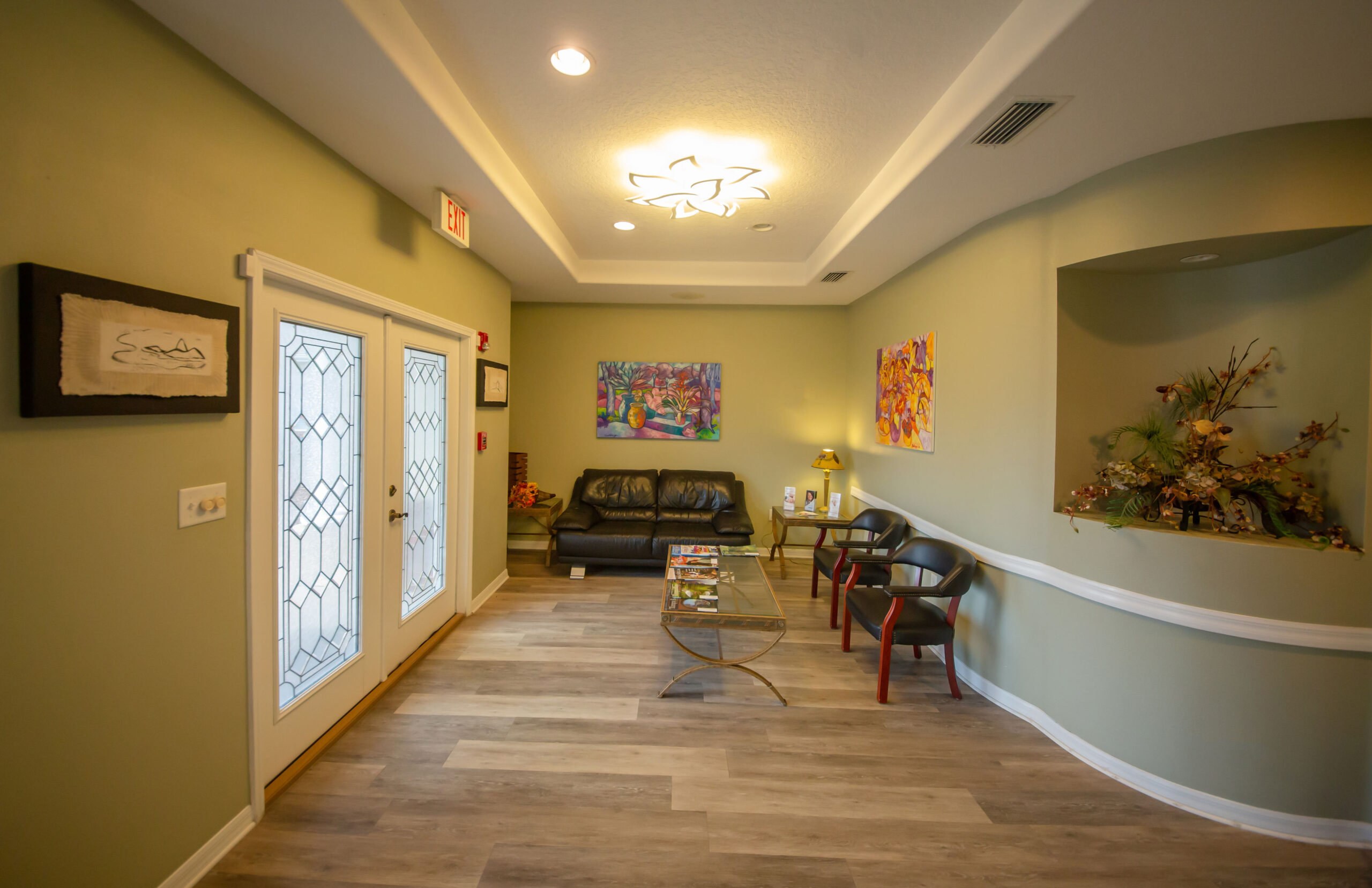
Many patients find that a quieter, less clinical setting makes a difference: a welcoming reception area, unhurried conversations and treatment explained in plain language. Some technologies may also help certain people. For example, some soft tissue procedures can be done with a dental laser, which some anxious patients find less stressful than a drill, though experiences vary.
When anxiety is severe
If fear stops you from getting care, talk with your dentist and your physician. Options can include referral to a therapist who works with specific phobias, or sedation options at offices that provide them. Cognitive behavioral therapy has been studied for dental fear and may help some people.
Why it is worth tackling
Avoiding the dentist can allow cavities and gum disease to progress quietly. Preventive visits are usually shorter and simpler than emergency treatment, so the earlier you return, the easier it tends to be.
At All Ages Dental Spa
As its name suggests, All Ages Dental Spa in Tampa aims to offer a calm, spa-like setting for patients of all ages. If you feel anxious, let us know when you book so we can talk through what may help you feel more comfortable. You can read what other patients say on our reviews page.
Frequently asked questions
How common is dental anxiety?
Studies vary by country and method. A U.S. study in private dental practices found about 19% of patients had moderate to high dental anxiety, and around 7% had high anxiety.
What helps with dental anxiety?
Telling the dental team, agreeing on a stop signal, getting step-by-step explanations, breathing techniques, music and short regular visits help many people. For severe fear, therapy or sedation options may be considered.
Can I ask for breaks during treatment?
Yes. It is reasonable to ask for breaks and to agree on a signal to pause before treatment starts.
I have not been to the dentist in years. Where do I start?
Start with an exam and a conversation about your concerns. A dentist can help prioritize treatment and spread it over several visits.
Feeling nervous about your next visit? Contact All Ages Dental Spa in Tampa and let us know how we can help you feel more at ease.
This article is general information for patients and does not replace an exam or personal medical advice.
Sources
- Prevalence of dental anxiety in dental practice settings (Journal of Dental Hygiene, 2017)
- Oosterink et al., Prevalence of dental fear and phobia relative to other fears (Eur J Oral Sci, 2009)
- Silveira et al., Estimated prevalence of dental fear in adults: systematic review and meta-analysis (J Dent, 2021)