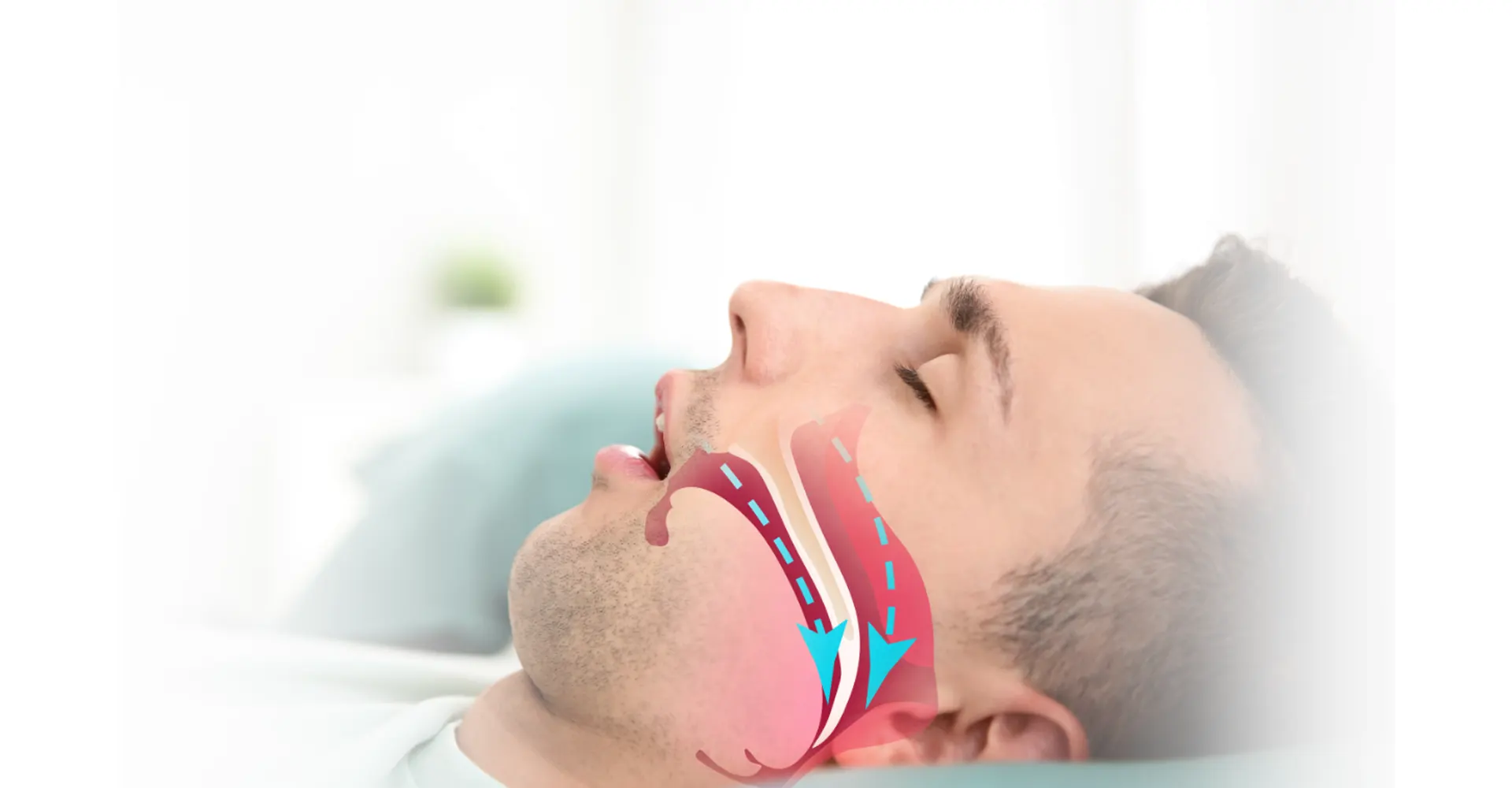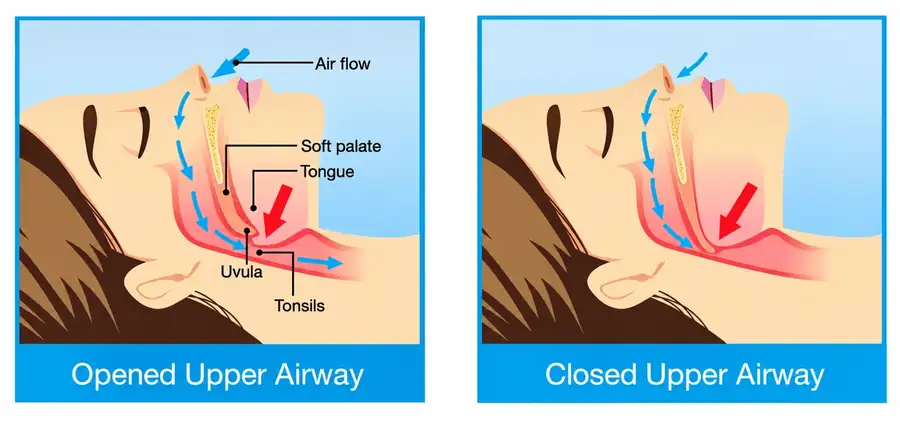
Mouth breathing means breathing mainly through the mouth instead of the nose, especially during sleep. It is common, affecting an estimated 11% to 56% of children depending on the study. In children it is associated with changes in how the jaws and face grow, and at any age it dries the mouth and can be a sign of sleep-disordered breathing. Dentists may be among the first to notice it.
Key takeaways
- Mouth breathing is frequently caused by a blocked nose, enlarged adenoids or tonsils, allergies or habit.
- Meta-analyses link childhood mouth breathing to a longer lower face, a steeper jaw angle and narrower airway measurements.
- A dry mouth raises the risk of cavities, gum inflammation and bad breath.
- Snoring and mouth breathing can point to sleep apnea in adults and children.
Why nasal breathing is better
The nose filters, warms and humidifies the air you breathe. Breathing through it also keeps the lips closed and the tongue resting against the palate, which in growing children helps guide the upper jaw to develop wide enough for the teeth. When the mouth hangs open, the tongue drops, the lips stay apart and the mouth dries out.
How mouth breathing affects children
A 2021 systematic review and meta-analysis in BMC Oral Health compared mouth-breathing and nose-breathing children and found differences in jaw position and narrower airway measurements, and concluded that airway narrowing was common in mouth-breathing children. A 2020 meta-analysis found mouth breathers had a steeper mandibular plane angle and a taller lower face. Researchers still debate how much is cause and how much is effect, but the pattern is consistent enough that early screening is recommended.
Signs to look for in children:
- Lips apart at rest, during the day or while asleep.
- Snoring, noisy breathing or restless sleep.
- Dark circles under the eyes and daytime tiredness.
- Crowded teeth, a narrow upper jaw or a crossbite.
- Frequent colds, allergies or a constantly stuffy nose.
- Trouble concentrating, which can be linked to poor sleep.
How mouth breathing affects adults
In adults, mouth breathing dries the gums and teeth, reduces saliva’s protective effect and is linked to more plaque, gum inflammation and bad breath. It often goes together with snoring. Loud snoring with pauses in breathing, choking at night or morning headaches can be signs of obstructive sleep apnea, which needs a sleep study. Read about oral appliance therapy for sleep apnea.
What can be done
Treatment depends on the cause, so the first step is finding it:
- An ENT or pediatrician can check for enlarged adenoids or tonsils, a deviated septum or allergies.
- Allergy treatment can open the nasal passages.
- Myofunctional therapy exercises can retrain tongue and lip posture.
- In growing children, orthodontic expansion of a narrow upper jaw may be recommended.
- In adults with diagnosed sleep apnea, a custom oral appliance is one treatment option.
The dentist’s role
A dental exam can include a look at tongue posture, the palate, the tonsil area, tooth wear and signs of dry mouth. When warning signs appear, a referral to the right specialist may be recommended. Learn more about how we approach the airway on our sleep apnea therapy page, or read holistic dental care for kids.
Frequently asked questions
Is mouth breathing bad for children?
Persistent mouth breathing in children is associated with changes in jaw and facial growth, crowded teeth and poorer sleep. It is worth having a dentist or pediatrician look for the cause.
What causes mouth breathing?
Common causes include nasal congestion from allergies, enlarged adenoids or tonsils, a deviated septum and long-standing habit.
Can mouth breathing cause cavities?
It can raise the risk. Breathing through the mouth dries it out, and saliva is one of the main protections against acid and bacteria.
Should I tape my mouth at night?
Mouth taping is popular online but has limited research and can be unsafe if your nose is blocked or you have sleep apnea. Talk to a dentist or physician before trying it.
Noticing mouth breathing or snoring in your child or yourself? Book an exam at All Ages Dental Spa in Tampa.
This article is general information for patients and does not replace an exam or personal medical advice.
Sources
- Zhao et al., Effects of mouth breathing on facial skeletal development in children: systematic review and meta-analysis (BMC Oral Health, 2021)
- Zheng et al., Facial morphological characteristics of mouth breathers vs. nasal breathers: meta-analysis (2020)
- The impact of mouth breathing on dentofacial development: a concise review (Frontiers in Public Health, 2022)
- ADA: Obstructive sleep apnea